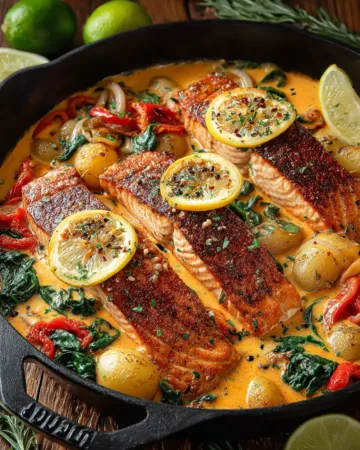
Thai-Inspired Salmon Coconut Curry is a bold and comforting dish that brings together tender salmon, creamy coconut milk, and aromatic red curry paste in one satisfying skillet meal. This Thai-Inspired Salmon Coconut Curry recipe is designed for home cooks who want restaurant style flavor using simple techniques and accessible ingredients.
With rich coconut curry sauce, fresh vegetables, and perfectly seared salmon fillets, this dish delivers balance between heat, sweetness, and acidity. Whether you are new to Thai cooking or looking to elevate weeknight dinners, Thai-Inspired Salmon Coconut Curry is an easy and impressive option that fits naturally into a modern American kitchen.
Equipment
A large high sided skillet or cast iron pan is essential for even heat and proper searing.
A wide spatula helps flip salmon fillets without breaking them.
A sharp chef knife is needed for slicing bell peppers and bananas evenly.
Measuring spoons and cups ensure balanced curry flavor.
Paper towels are useful for wiping the skillet between steps.
Ingredients List
1.7 lb salmon fillets cut into four even portions with skin on for searing
¼ teaspoon fine sea salt for seasoning
¼ teaspoon freshly ground black pepper for gentle heat
3 tablespoons olive oil divided for cooking stages
For the red curry coconut milk sauce
1 large red bell pepper thinly sliced for sweetness and color
1 tablespoon olive oil for sautéing vegetables
14 oz full fat unsweetened coconut milk for creamy texture
2 tablespoons red curry paste for Thai inspired spice
1 tablespoon Red Boat Fish Sauce or Thai Kitchen Fish Sauce for savory depth
1 tablespoon honey to balance heat
2 tablespoons fresh lemon juice for brightness
5 oz fresh spinach leaves for color and nutrients
2 large ripe bananas sliced to add subtle sweetness
For garnish
Fresh lemon slices for serving
Chopped fresh parsley for a clean herbal finish
Part One Searing the Salmon
Preparing the Fillets
Start by patting the salmon fillets dry with paper towels. This step helps achieve a crisp exterior during searing. Season only the flesh side with salt and black pepper. Rub one tablespoon of olive oil gently over the seasoned surface, keeping the skin dry so it releases easily during cooking. Let the salmon rest at room temperature for a few minutes to promote even cooking.
Searing Technique
Heat a large skillet over medium heat for about two minutes. Add two tablespoons of olive oil and allow it to shimmer. Place the salmon fillets flesh side down with the skin facing up. Cook undisturbed for four minutes so a golden crust forms. Carefully flip each fillet using a wide spatula and cook skin side down for another five minutes on medium heat. Remove from heat once the salmon is just cooked through and tender in the center.
Part Two Building the Curry Base
Removing the Skin
Using a wide spatula, gently slide between the salmon flesh and the skin. Lift the fillet away cleanly and transfer it to a plate. Discard the skins or reserve them if you enjoy crispy salmon skin. Wipe the skillet thoroughly with paper towels to remove excess oil and browned bits, ensuring a clean base for the curry sauce.
Cooking the Bell Pepper
Add one tablespoon of olive oil to the cleaned skillet and place it over medium heat. Add the thinly sliced red bell pepper and cook for about four minutes, stirring occasionally. The peppers should soften slightly and develop light charred edges for added flavor. Transfer the cooked peppers to the plate with the salmon.
Part Three Creating the Coconut Curry Sauce
Blending the Sauce
Return the skillet to medium heat and pour in the coconut milk. Add the red curry paste, fish sauce, honey, and lemon juice. Stir constantly for about five minutes until the sauce becomes smooth and evenly colored. This step allows the curry paste to bloom in the coconut milk, releasing its full aroma and flavor.
Adding Greens and Fruit
Add the fresh spinach directly into the simmering sauce and stir until fully wilted. This takes about one minute and adds freshness to the rich curry. Gently fold in the sliced bananas and cooked bell peppers. The bananas soften quickly and contribute a subtle sweetness that balances the spice of the curry paste.
Part Four Final Assembly and Finish
Reheating the Salmon
Carefully return the cooked salmon fillets to the skillet, nestling them into the curry sauce. Spoon some sauce over the top to coat each piece. Let everything warm together for two to three minutes over low heat. Avoid boiling at this stage to keep the salmon moist and tender.
Garnishing and Serving
Remove the skillet from heat and garnish the Thai-Inspired Salmon Coconut Curry with fresh lemon slices and chopped parsley. The citrus aroma and herbs brighten the dish and enhance presentation. Serve immediately while the sauce is silky and warm.
Tips and Tricks
For the best Thai-Inspired Salmon Coconut Curry, choose center cut salmon fillets of equal thickness so they cook evenly. If you prefer milder heat, reduce the red curry paste slightly and add more coconut milk to mellow the spice. Always stir the curry sauce continuously while cooking to prevent separation. Fresh lemon juice works better than bottled juice for balanced acidity. Use ripe but firm bananas to avoid mushy texture. If the sauce thickens too much, add a splash of water or broth to loosen it gently. Cooking everything in one skillet helps flavors blend naturally and reduces cleanup time.
Notes
This Thai-Inspired Salmon Coconut Curry is flexible and forgiving. Red curry paste intensity varies by brand, so tasting as you cook is important. Coconut milk should be full fat for proper creaminess. Spinach can be substituted with baby kale if needed. Bananas might sound unexpected, but they complement coconut milk beautifully and help tame spicy notes. Always keep heat at medium or lower once the sauce is assembled to preserve texture. Let the curry rest for a few minutes before serving to allow flavors to settle.
Storage
Allow leftovers to cool completely before storing. Transfer Thai-Inspired Salmon Coconut Curry to an airtight container and refrigerate for up to three days. Reheat gently on the stovetop over low heat, stirring occasionally to keep the sauce smooth. Avoid microwaving at high power, as it may overcook the salmon. Freezing is not recommended due to the coconut milk and banana texture changes after thawing.
Variations
You can customize Thai-Inspired Salmon Coconut Curry by adding sliced zucchini, mushrooms, or snap peas for extra vegetables. Shrimp or firm tofu can replace salmon if desired. For extra richness, stir in a small spoon of coconut cream before serving. Lime juice can be used instead of lemon for a sharper citrus profile. Adjust curry paste levels to suit your heat preference while keeping the balance of sweet and savory intact.
Serving Suggestions
Serve Thai-Inspired Salmon Coconut Curry over jasmine rice or fluffy basmati rice to soak up the sauce. It also pairs well with rice noodles or quinoa for a lighter option. A simple cucumber salad on the side adds refreshing contrast.
Conclusion
Thai-Inspired Salmon Coconut Curry is a flavorful one skillet meal that combines creamy coconut milk, vibrant curry spices, and tender salmon into a comforting yet exciting dish. With straightforward steps and accessible ingredients, this recipe brings Thai inspired flavors into everyday cooking. From the perfectly seared salmon to the balanced coconut curry sauce, Thai-Inspired Salmon Coconut Curry is a satisfying option for both casual dinners and special occasions, delivering bold taste with minimal effort.
PrintThai-Inspired Salmon Coconut Curry
- Total Time: 40 minutes
- Yield: 4 servings
Description
Thai-Inspired Salmon Coconut Curry is a rich and comforting skillet meal made with seared salmon fillets simmered in a creamy coconut milk sauce infused with red curry paste, citrus, and natural sweetness. This recipe balances savory, spicy, and mildly sweet flavors while staying approachable for home cooks. It delivers restaurant-style results using simple techniques and everyday ingredients, making it perfect for weeknight dinners or relaxed entertaining.
Ingredients
Salmon fillets cut into four equal portions with skin on
Fine sea salt
Freshly ground black pepper
Olive oil divided
Large red bell pepper thinly sliced
Full fat unsweetened coconut milk
Red curry paste
Red Boat Fish Sauce or Thai Kitchen Fish Sauce
Honey
Fresh lemon juice
Fresh spinach leaves
Ripe bananas sliced
Fresh lemon slices for garnish
Chopped fresh parsley for garnish
Instructions
1. Heat a large high sided skillet over medium heat until warm
2. Pat the salmon fillets dry and season only the flesh side with salt and black pepper
3. Rub a small amount of olive oil over the seasoned side of the salmon
4. Add olive oil to the skillet and place the salmon flesh side down
5. Cook without moving until a golden crust forms
6. Flip the salmon carefully and cook until just tender
7. Remove salmon from the skillet and separate the flesh from the skin
8. Set the salmon aside and wipe the skillet clean
9. Add olive oil and cook the sliced red bell pepper until lightly charred
10. Remove the bell pepper and set aside
11. Pour coconut milk into the skillet and stir in red curry paste
12. Add fish sauce honey and lemon juice and stir until smooth
13. Simmer gently until the sauce thickens slightly
14. Add spinach and stir until fully wilted
15. Fold in sliced bananas and cooked bell peppers
16. Return the salmon to the skillet and spoon sauce over the top
17. Warm gently until everything is heated through
18. Remove from heat and garnish with lemon slices and parsley
Notes
Use center cut salmon fillets of similar thickness to ensure even cooking.
Full fat coconut milk provides the best texture and flavor for the sauce.
Red curry paste strength varies by brand so adjust to taste.
Bananas should be ripe but firm to prevent them from breaking down too much.
Keep the heat moderate once the sauce is assembled to maintain a smooth consistency.
Allow the curry to rest briefly before serving so the flavors can settle.
- Prep Time: 15 minutes
- Cook Time: 25 minutes
- Category: Main Course
- Method: Skillet Cooking
- Cuisine: Thai Inspired