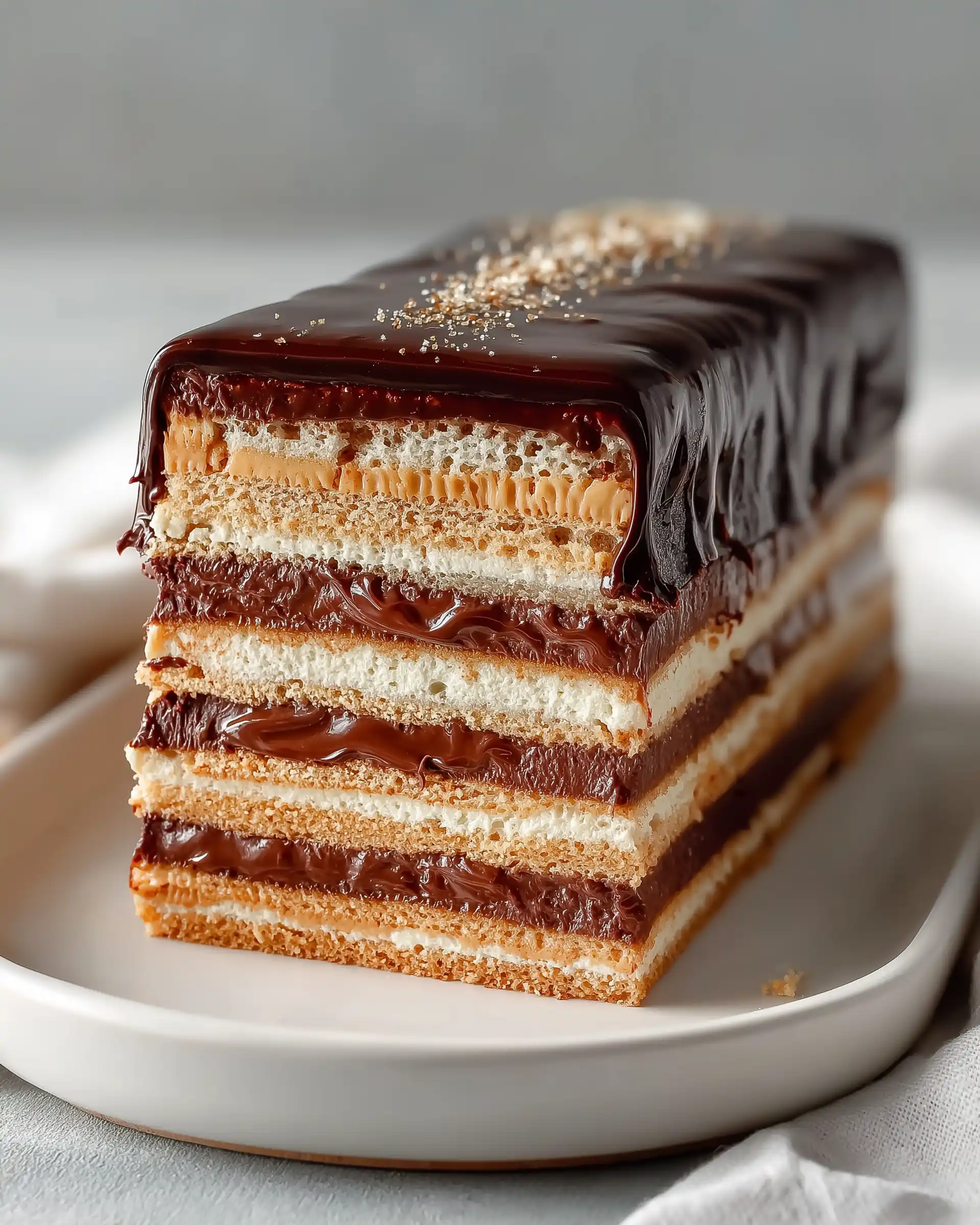
French Opera Cake is a multi-layered dessert known for its sophistication, rich flavors, and precise construction. This elegant patisserie staple combines almond sponge cake, coffee-infused syrup, silky French buttercream, deep chocolate ganache, and a glossy chocolate glaze.
It’s a dessert that’s both challenging and rewarding, perfect for those who appreciate precision and decadence in every bite. In this article, you’ll learn how to master the French Opera Cake Recipe from scratch using detailed instructions, key techniques, and baking tips that help you achieve patisserie-level results right at home.
From understanding the unique Joconde sponge to creating the perfect coffee soak and buttercream texture, we’ll guide you step by step. Whether you’re baking this for a special occasion or simply want to elevate your home baking skills, this guide will help you deliver an unforgettable dessert.
Mastering the Joconde Sponge for Opera Cake
What Is a Joconde Sponge?
The Joconde sponge is a delicate almond-based cake layer that provides structure without overwhelming the other components. It’s pliable, light, and rich thanks to the almond flour, making it ideal for layered desserts like the Opera Cake.
Unlike traditional sponge cakes, Joconde uses a combination of whole eggs, whipped egg whites, and almond flour. This blend results in a sponge that is soft enough to soak up coffee syrup and strong enough to stack in multiple layers.
Essential Ingredients and Ratios
To make six thin layers of Joconde sponge for a 6-inch square cake, you’ll need:
- 1 cup (100g) almond flour
- 1/2 cup (100g) granulated sugar
- 1/4 tsp salt
- 1 tsp vanilla extract
- 3 large eggs
- 3 large egg whites
- 1/4 cup (50g) granulated sugar (for egg whites)
- 1/2 cup (60g) all-purpose flour
- 2 Tbsp (28g) melted butter
Each of these ingredients plays a specific role. Almond flour contributes a nutty richness. The whipped egg whites add volume, and flour ensures a soft, absorbent texture.
Techniques for Perfect Texture
Start by beating almond flour, sugar, salt, vanilla, and eggs until the mixture becomes pale and fluffy. Separately, whip the egg whites with sugar to stiff peaks, then fold them gently into the almond mixture to preserve the airiness.
Sift in the flour in two batches, folding slowly each time to avoid deflating the batter. Pour the melted butter along the bowl’s edge and gently incorporate it. This folding technique keeps the sponge light and prevents it from becoming dense.
Baking and Layering the Sponge
Spread 1/6 of the batter (about 3.5oz) evenly into a greased 6-inch square pan. Bake at 375°F (190°C) for 7 minutes. The sponge should pull slightly from the pan’s edges and spring back when touched.
Invert each layer onto a flat surface. Repeat until all six layers are baked. Cool completely before assembling. These thin layers will later absorb the coffee soak and hold the buttercream and ganache without crumbling.
Crafting the Perfect Coffee Soak for Authentic Flavor
Why the Coffee Soak Matters
In a classic French Opera Cake Recipe, the coffee soak isn’t just a side note—it’s the heart of the flavor profile. Each sponge layer is brushed with this fragrant syrup, infusing the cake with a bold but balanced coffee taste. It keeps the cake moist while contrasting beautifully with the sweetness of the buttercream and the richness of the ganache.
The key is to use strong, freshly brewed coffee, cooled to room temperature. This ensures maximum absorption into the sponge without turning it soggy.
Ingredients and Proportions
For the soak, you only need two ingredients:
- 3/4 cup (177mL) brewed coffee
- 1/4 cup (50g) granulated sugar
Make sure your coffee is brewed strong—ideally using espresso or a dark roast. The sugar not only sweetens the coffee but also enhances its ability to penetrate the sponge evenly.
Making and Applying the Soak
Heat the coffee just enough to dissolve the sugar, then let it cool completely. This prevents any unwanted melting of the sponge layers during assembly. Use a pastry brush to generously coat each sponge layer. Be careful not to over-soak—each layer should be moist but not dripping.
This step builds the Opera Cake’s signature depth and aroma. The coffee flavor is subtle but persistent in every bite, making the cake luxurious without being overwhelming.
Making a Rich and Silky Chocolate Ganache
The Role of Ganache in a French Opera Cake
In the French Opera Cake Recipe, the chocolate ganache adds a deep, smooth, and slightly bitter contrast to the sweet buttercream and almond sponge. Positioned between layers, it enhances both texture and taste, creating a luxurious mouthfeel that melts beautifully on the tongue.
Ganache also acts as a structural element. When chilled, it firms up, helping stabilize the cake during assembly and slicing.
Simple, High-Quality Ingredients
The ganache requires only two ingredients:
- 1 cup (6oz) dark chocolate
- 1/2 cup (118mL) heavy whipping cream
Use good-quality dark chocolate (ideally 60–70% cocoa). The better the chocolate, the smoother and richer your ganache will taste. Avoid chocolate chips, which often contain stabilizers that affect texture.
Step-by-Step Preparation
Chop the chocolate finely and place it in a heat-safe bowl. Heat the cream in a saucepan over medium-low heat just until it begins to simmer—do not boil. Pour the hot cream over the chocolate and cover the bowl for 2 minutes. Then stir slowly with a spatula or whisk until completely smooth and glossy.
Let the ganache sit at room temperature until it thickens to a spreadable consistency. This usually takes about 20–30 minutes. Do not refrigerate at this point, or it may stiffen too quickly and become difficult to spread.
Application Tips
When layering, spread the ganache to match the thickness of each sponge layer. Use a small offset spatula to keep the layers even. Make sure it reaches the edges without overflowing.
The ganache not only enhances the cake’s flavor but also balances the sweetness from the buttercream. Speaking of which, let’s now move on to the most technically challenging—and rewarding—component: the coffee French buttercream.
Creating a Luscious Coffee French Buttercream
What Makes French Buttercream Unique?
French buttercream is known for its silky texture and luxurious richness. Unlike American buttercream, which uses powdered sugar, French buttercream is made by whipping hot sugar syrup into egg yolks, then adding butter. For the Opera Cake, we enhance it with espresso, which brings out the full depth of the coffee flavor and ties together all the cake’s elements.
This component demands attention to temperature and timing but rewards you with a smooth, creamy filling that holds up beautifully between the sponge layers.
Ingredients You’ll Need
Here’s what goes into the buttercream:
- 1 cup (200g) granulated sugar
- 1/4 cup (59mL) water
- 4 large egg yolks (room temperature)
- 1 cup (227g) unsalted butter (room temperature)
- 1 Tbsp espresso powder dissolved in 1 Tbsp hot water
- 2 tsp vanilla bean paste or extract
- 1/8 tsp salt
Using room temperature butter and egg yolks is critical for achieving the proper emulsion.
Cooking the Sugar Syrup
In a saucepan, combine sugar and water. Gently swirl the pan to ensure the sugar is fully moistened. Heat over medium until it begins to simmer, then reduce to low and cover for 2 minutes to help dissolve any crystals.
Meanwhile, whip the egg yolks in a stand mixer on high speed until thick and pale. Once the sugar syrup reaches 240°F (116°C) using a candy thermometer, slowly drizzle it into the yolks while the mixer is running at medium speed. After all the syrup is added, increase the speed to high and whip until the bowl is cool and the mixture is light and fluffy. This can take up to 10 minutes.
Finishing the Buttercream
Lower the speed to medium and add the butter, two tablespoons at a time. Continue mixing until the butter is fully incorporated and the buttercream looks silky. Add the espresso mixture, vanilla, and salt, then whip for 1–2 more minutes to combine.
The end result is a coffee-kissed buttercream that is stable, smooth, and utterly decadent. It’s perfect for layering and for finishing the outside of the cake with an elegant coat.
Assembling and Glazing the French Opera Cake
Layering the Components in Order
The French Opera Cake Recipe calls for careful layering to ensure each bite is harmonious. Begin with one Joconde sponge layer on a flat board or serving platter. Brush it generously with the cooled coffee soak, letting the sponge absorb it without becoming soggy.
Next, spread a layer of coffee buttercream about the same thickness as the sponge. Use an offset spatula for even application. Add the second sponge layer, soak it again, and spread a layer of chocolate ganache. Continue this alternating pattern:
- Sponge + coffee soak
- Coffee buttercream
- Sponge + coffee soak
- Chocolate ganache
- Repeat until all six layers are used
Finish the top with a layer of buttercream, smoothing out the top and sides of the cake as cleanly as possible. Use a serrated knife to trim the edges, creating neat, straight sides for a professional look.
Chill the cake for at least 2–3 hours before applying the glaze. This step helps the layers firm up and makes it easier to get a smooth finish.
Making and Pouring the Chocolate Glaze
The final touch is a sleek chocolate glaze that gives the Opera Cake its signature mirror-like finish. Here’s how to make it:
- 1/2 cup (3oz) dark chocolate
- 1 Tbsp (15mL) coconut oil
Melt the chocolate and coconut oil together in a double boiler. Stir frequently until the mixture is completely smooth and fluid. Let it cool for about 5 minutes—if it’s too hot, it will melt the buttercream.
Pour the glaze over the top of the chilled cake and gently tilt the cake to spread the glaze evenly across the surface. Use a spatula only if necessary to lightly smooth it out.
Place the cake in the refrigerator for a few minutes to let the glaze set. Avoid touching it once set, as it can leave marks.
Pro Tips for Clean Slicing
To slice without cracking the glaze:
- Heat a serrated knife under hot water
- Wipe off excess moisture
- Lightly score the glaze before slicing
- Cut slowly with a back-and-forth motion
Conclusion
Mastering the French Opera Cake Recipe is no small feat, but it’s a rewarding experience for any home baker ready to elevate their skills. With its delicate layers of almond sponge, rich coffee soak, smooth chocolate ganache, and silky French buttercream, every bite tells a story of technique, patience, and indulgence.
This elegant dessert is more than just a cake—it’s a work of edible art that captures the essence of classic French patisserie. Whether you’re preparing it for a special celebration or simply challenging yourself in the kitchen, the Opera Cake delivers on taste, texture, and wow-factor.
By following each carefully structured step, you’ll not only understand the craft behind this luxurious dessert, but also build the confidence to make it again, maybe even customizing it to your own style.
Now that you’ve completed this journey, it’s time to enjoy the fruits of your labor. Slice with care, serve chilled, and let every layer melt into perfection.