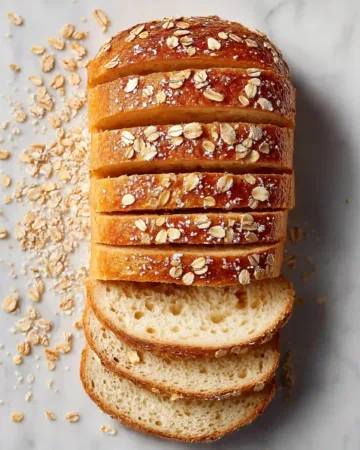



Brown Sugar Oat Bread is a warm and comforting loaf that brings together wholesome rolled oats, subtle sweetness, and a soft crumb perfect for sandwiches or morning toast. This recipe focuses on simple pantry ingredients and an easy mixing method that anyone can follow.
The combination of oats, milk, and light brown sugar creates a tender texture while keeping every slice hearty enough for everyday use. In this guide, you will learn how to prepare the dough from start to finish, shape it correctly, and bake a loaf that smells amazing and slices beautifully.
Step by Step
Preparing the Dough
Begin by gathering all your ingredients so everything is measured and ready. You will need bread flour, rolled oats, butter, salt, brown sugar, instant yeast, and lukewarm milk. The oats provide structure and a pleasant chew while the brown sugar adds a balanced sweetness that complements the wheat flavor. Use rolled oats rather than quick oats since they hold their texture better during mixing and baking.
Measure the flour either by weight or by gently spooning it into a cup and leveling the top. Place the bread flour, rolled oats, butter, salt, brown sugar, instant yeast, and lukewarm milk into a large mixing bowl. Stir until the mixture comes together into a rough and slightly shaggy dough. It may appear sticky at this stage which is completely normal and part of what keeps the finished bread tender.
Kneading the Dough
Knead the dough by hand or with a stand mixer until it becomes soft and springy. This usually takes five to seven minutes. Resist the temptation to add extra flour even if the dough feels sticky when you first start. Too much flour will produce a dry loaf. If kneading by hand, lightly grease your work surface with a thin layer of oil to prevent sticking. Continue kneading until the dough bounces back lightly when pressed.
Place the finished dough in a lightly greased bowl and cover it. Allow it to rise at room temperature for about one hour. It will become noticeably puffy but does not need to double. If your kitchen is cool, place the bowl in an oven that is turned off with only the light on. This creates a slightly warm environment that helps the dough rise at a steady pace.
Shaping the Dough
Once the dough has risen, transfer it onto a lightly oiled work surface. Pat it gently into a six by eight inch rectangle. Fold the top third of the dough down toward the center as you would fold a letter. Press the seam with the heel of your hand to seal it. Bring the upper corners inward and press again. Fold the dough in this manner three or four times until it becomes a tight log measuring about nine to ten inches.
Tuck the ends slightly underneath for a clean shape and place the seam side down in a greased nine by five inch loaf pan. Cover the pan loosely with lightly greased plastic wrap. Let the dough rise again for one to one and a half hours until the top crowns about one inch above the rim of the pan.
Adding the Topping
Near the end of the rising time, preheat your oven to three hundred fifty degrees Fahrenheit. In a small bowl, whisk one egg white with a tablespoon of cold water. Brush a thin layer of the mixture over the surface of the risen loaf. Sprinkle rolled oats on top for a rustic and appealing finish.
Baking
Bake the bread for thirty five to forty minutes until the crust turns a rich golden brown. If the loaf browns too quickly, cover it loosely with foil during the last ten minutes of baking. Insert a digital thermometer into the center. The bread is done when it reaches one hundred ninety degrees. If you do not have a thermometer, slide the loaf out of the pan and tap the bottom. A hollow sound indicates that it is fully baked.
Transfer the loaf to a cooling rack and allow it to cool completely before slicing. This prevents the interior from becoming gummy and helps the texture set properly. Store the bread wrapped at room temperature for several days or freeze it for longer storage.
Tips and Tricks
Boosting Flavor and Texture
One of the easiest ways to enhance Brown Sugar Oat Bread is to focus on ingredient quality and mixing technique. Rolled oats add gentle nuttiness, and using fresh bread flour helps the loaf rise evenly with a soft crumb. Warm milk encourages proper yeast activation, so make sure it feels just slightly warm to the touch, not hot. A touch of butter gives the bread a smooth finish and helps the crust brown beautifully. If you prefer a chewier texture, let the dough rest for ten minutes before kneading. This rest allows the flour to hydrate more evenly, making the dough easier to handle.
Perfect Crust and Soft Interior
For a tender interior, avoid over-kneading. You want the dough to feel elastic yet soft. While rising, keep the dough lightly covered to prevent drafts, since cool air can slow fermentation. The egg white wash gives the crust a glossy finish and helps the oats adhere without flaking off. If you prefer a softer crust overall, brush the warm loaf with a little melted butter right after baking. This small step makes each slice especially pleasant for sandwiches and toast.
Notes
Ingredient Substitutions and Adjustments
This recipe uses simple ingredients that are easy to find in most grocery stores. Rolled oats work best because they keep their shape without dissolving. Light or dark brown sugar both work, with dark sugar giving a deeper molasses flavor. Instant yeast creates a predictable rise, but active dry yeast performs just as well when mixed with the dry ingredients. If you want a richer flavor, swap part of the milk for milk powder mixed with water. For a slightly nutty twist, add a small amount of whole wheat flour, though the loaf may rise a bit less since whole wheat absorbs more liquid.
Dough Behavior and Rising
The dough will feel sticky at first, which is completely normal for oat-enriched bread. Avoid adding extra flour unless absolutely necessary. During shaping, keep the surface lightly oiled rather than floured to maintain moisture. If the dough rises too slowly, warm the environment slightly by placing the bowl near a warm spot in the kitchen. If it rises too quickly, place the dough in a cooler area so it develops flavor more slowly and evenly. Consistent temperature helps produce a loaf with great texture and balanced taste.
Storage
Short Term Storage
Once the Brown Sugar Oat Bread has cooled completely, wrap it in plastic wrap or place it in an airtight container. At room temperature, it stays fresh for several days without drying out thanks to the moisture from the milk and oats. If you store it in a bread box, keep it wrapped to prevent air exposure which can firm the crumb sooner than expected. For easy slicing throughout the week, pre-slice the loaf and keep it sealed tightly.
Freezing and Long Term Storage
To freeze the loaf, wrap it securely in plastic, then place it in a freezer-safe bag. You can freeze it whole or slice it first for convenient single-portion use. Frozen slices thaw in just a few minutes at room temperature or can go directly into the toaster. The bread maintains excellent flavor for up to three months in the freezer. When ready to enjoy, avoid thawing uncovered which can draw out moisture. Keep the loaf wrapped until fully thawed to preserve softness and freshness.
Conclusion
Brown Sugar Oat Bread is a comforting and satisfying homemade loaf that blends natural sweetness, soft texture, and hearty oats. With simple ingredients and clear steps, anyone can create a bakery-worthy loaf right at home. By following careful kneading, proper rising, and thoughtful storage methods, you can enjoy fresh slices whenever you like. Let me know if you want images, social captions, or tasty card options.
Print
Brown Sugar Oat Bread
- Total Time: 2 hrs 50 mins
- Yield: 1 loaf
- Diet: Vegetarian
Description
Brown Sugar Oat Bread is a soft and lightly sweet homemade loaf made with rolled oats, brown sugar and milk for a tender crumb and warm flavor. It works well for sandwiches, toast or a fresh slice with butter. The dough is easy to prepare and the oats add a wholesome chew while keeping the loaf moist and hearty.
Ingredients
3 cups 360g King Arthur Unbleached Bread Flour
1 cup 89g old fashioned rolled oats or 1 cup 113g King Arthur Rolled Oats
2 tablespoons 28g butter
1 1/2 teaspoons 9g table salt
3 tablespoons 40g light brown sugar or dark brown sugar or 3 tablespoons 63g honey
2 teaspoons instant yeast or equal amount active dry yeast
1 1/4 cups 283g lukewarm milk
1 large egg white for topping
1 tablespoon 14g cold water for topping
1 to 2 tablespoons 6g to 12g rolled oats for topping or 1 to 2 tablespoons 7g to 14g King Arthur Rolled Oats
Optional dairy free swaps dairy free butter and plant based milk such as almond milk or rice milk
Optional add ins chopped nuts dried fruit or seeds at the end of mixing
Instructions
1.
2. Weigh or measure the flour by spooning it into a cup and leveling it
3. In a large bowl or stand mixer bowl combine bread flour rolled oats butter salt brown sugar or honey instant yeast and lukewarm milk mix until a rough dough forms
4. Knead by hand or mixer until the dough becomes soft and springy about 5 to 7 minutes avoid adding extra flour even if sticky
5. If kneading by hand lightly grease the work surface instead of flouring it to keep the dough moist
6. Place the kneaded dough in a lightly greased bowl cover and let rise at room temperature about 1 hour until puffy
7. If the kitchen is cool place the dough in a turned off oven with the light on
8. Transfer the dough to a lightly oiled surface and press into a 6 by 8 inch rectangle
9. Fold the top third toward the center and press to seal fold upper corners inward and press repeat folding until a tight log forms 9 to 10 inches long
10. Tuck the ends under and place seam side down in a greased 9 by 5 inch loaf pan cover and let rise 1 to 1 1/2 hours until the loaf peaks about 1 inch above the pan
11. Preheat oven to 350°F toward the end of rising
12. Beat the egg white with cold water brush lightly over the surface then sprinkle rolled oats on top
13. Bake 35 to 40 minutes until golden brown cover loosely with foil if browning too quickly
14. The loaf is done when the center reads 190°F or sounds hollow when tapped
15. Cool the loaf out of the pan on a rack and allow to cool fully before slicing
16. Wrap and store at room temperature several days or freeze for longer storage
17.
Notes
Rolled oats give the best texture quick oats break down too easily
Light or dark brown sugar both work dark sugar adds deeper flavor
Instant yeast gives steady rising but active dry yeast works the same when added with the dry ingredients
The dough will feel sticky at first avoid adding extra flour to keep the loaf tender
For a softer crust brush the warm loaf with melted butter after baking
For whole grain variation replace up to one cup of bread flour with whole wheat flour expect a slightly denser loaf
Freeze the loaf whole or sliced keep wrapped while thawing to preserve moisture
To make buns divide the dough shape into rounds reduce baking time as needed
- Prep Time: 15 mins
- Cook Time: 35 to 40 mins
- Category: Bread
- Method: Baking
- Cuisine: American