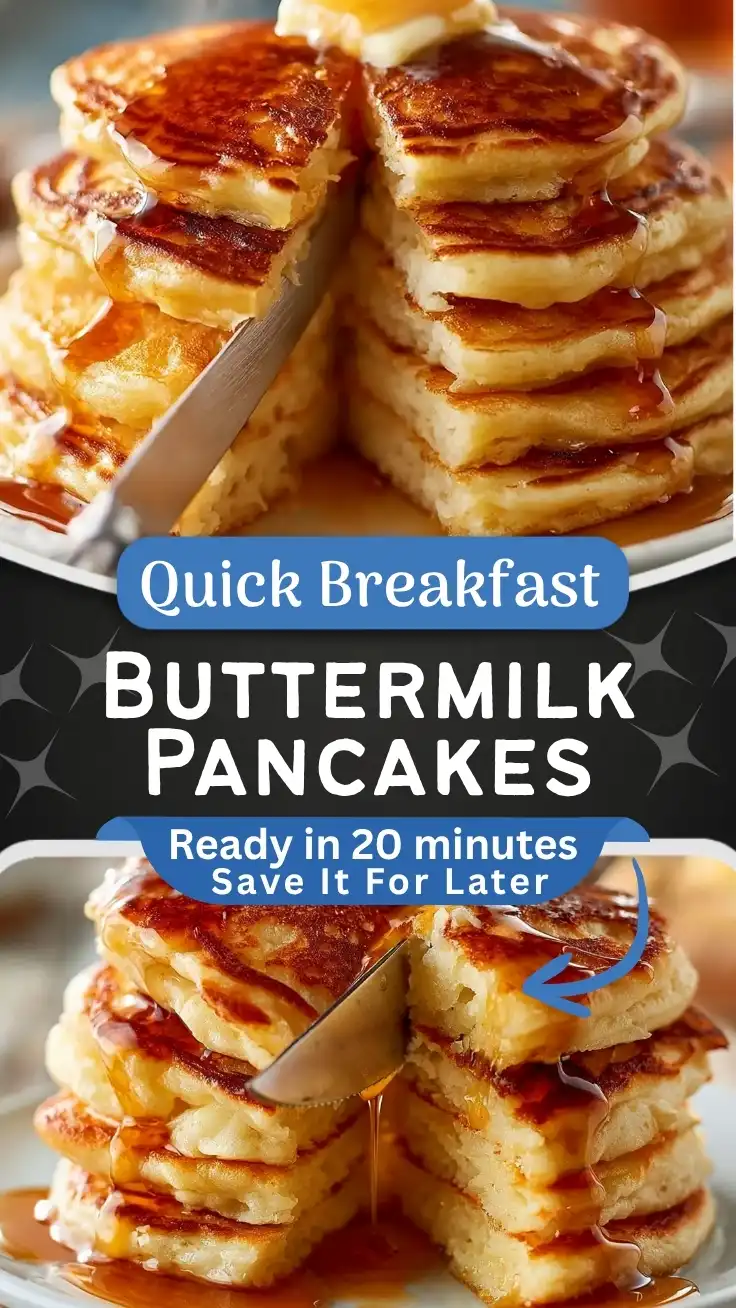
Fluffy buttermilk pancakes offer a comforting, soft, and tender breakfast option that resonates well with American home cooks and beyond. The balance of tangy buttermilk with a hint of sweetness creates the perfect texture and flavor to start your day. This straightforward recipe focuses on the essentials for golden, airy pancakes without complicating things. Ideal for weekday mornings or relaxed weekend brunches, these pancakes are both satisfying and quick to prepare.
Benefits And Why You’ll Love This Recipe
This recipe is loved for its simplicity and reliably fluffy texture. Using buttermilk ensures a nice tang along with a tender crumb, making every bite melt in your mouth. Its straightforward ingredient list means it’s accessible and budget-friendly. The recipe is perfect if you want a homemade breakfast that feels indulgent but doesn’t require complicated steps or fancy tools. While it’s rich in carbs and a comforting morning treat, moderation is key for those mindful of sugar intake.
Ingredients
- 2 cups all-purpose flour
- 2 teaspoons baking powder
- 1 teaspoon baking soda
- ½ teaspoon salt
- 2 tablespoons granulated sugar
- 2 cups buttermilk
- 2 large eggs, lightly beaten
- 1 teaspoon vanilla extract (alcohol-free), optional
Equipment and Time
- Large mixing bowl or large glass measuring cup
- Whisk
- Large skillet or griddle
- Non-stick cooking spray or butter/oil brush
- Ladle (1/3 to 1/2 cup)
Prep Time: 5 minutes
Cook Time: 15 minutes
Resting Time: 10 minutes
Step by Step Directions
- Start by whisking together the dry ingredients—flour, baking powder, baking soda, salt, and sugar—in a large bowl or a big glass measuring cup. Make sure everything is evenly combined for uniform batter texture.
- Add the buttermilk, lightly beaten eggs, and vanilla extract if using, into the dry mix. Stir gently with your whisk just until the ingredients come together; some small lumps are normal and preferred to keep pancakes tender.
- Allow the batter to rest at room temperature for 10 minutes. This step activates the baking powder and soda, producing air bubbles for fluffier pancakes.
- Heat your skillet or griddle on medium heat. Preheat thoroughly to ensure even cooking, which usually takes a few minutes. You can test the temperature by sprinkling a few drops of water on the surface; if they dance or sizzle, it’s ready.
- Lightly grease the cooking surface using a non-stick spray or a small brush of melted butter or oil. This helps prevent sticking and promotes even browning.
- Use a ladle to pour between 1/3 and 1/2 cup of batter for each pancake onto the hot skillet. Space them sufficiently so they don’t merge during cooking.
- Watch the pancakes as they cook: tiny bubbles will form and pop on the surface, and edges will start to look set. This usually takes 2 to 3 minutes.
- Flip the pancakes carefully using a spatula once you see these bubbles and edges set. Cook for about another 2 minutes on the other side until golden brown and cooked through.
- Remove pancakes from the skillet and place them on a warm plate. Repeat the process with the remaining batter, re-greasing the surface as needed.
- Serve hot with a pat of butter and maple syrup or your favorite toppings. Enjoy your fluffy, tender pancakes immediately for best taste and texture.
Storage
Leftover pancakes can be stored in an airtight container or wrapped tightly with plastic wrap to keep moisture out. They will keep well in the refrigerator for up to 2 days. For longer storage, freeze pancakes individually on a baking sheet, then transfer to a freezer bag. Reheat refrigerated pancakes in a microwave wrapped with a damp paper towel to maintain moisture, or toast them for a crisp finish. Frozen pancakes reheat best toasted from frozen until heated through. Avoid storing pancakes for more than 3 days fresh as they may lose texture and flavor.
Common Mistakes to Avoid
- Overmixing the batter: Mixing too long activates gluten, making pancakes dense instead of fluffy. Stir just until ingredients combine to keep batter light.
- Incorrect heat level: Too high heat burns pancakes outside while leaving the inside raw. Medium heat allows even cooking and better color.
- Flipping too early or too late: Flip only when bubbles form and edges set to prevent breakage or undercooking.
- Using expired leavening agents: Old baking powder or soda won’t create proper rise. Check expiration for best fluffiness.
- Skipping rest time: Resting the batter allows leavening to activate; skipping this reduces fluffiness.
Variations and Substitutions
For a healthier version, swap out all-purpose flour for whole wheat flour, but expect a slightly denser texture. If you want to reduce sugar, lower granulated sugar to 1 tablespoon without greatly affecting taste. For a dairy-free option, use almond milk blended with 2 tablespoons of lemon juice to mimic buttermilk. To speed up preparation, blend the wet and dry ingredients then immediately cook (note: resting improves fluffiness). Budget-friendly tweaks include using basic vanilla extract or omitting it entirely. Add-ins like blueberries, sliced bananas, or cinnamon can enhance flavor without complicating the recipe.
Tips and Tricks
- Letting batter rest allows chemical reactions for fluffy pancakes.
- Use a non-stick skillet or well-seasoned griddle for easy flipping.
- Check skillet temperature with water droplets before cooking to avoid burning.
- Lightly grease with butter or oil between batches to maintain golden color without sogginess.
- Use a 1/3 cup ladle for uniform pancake sizes cooking evenly.
- Flip pancakes only once after bubbles appear and edges firm up to keep shape intact.
Notes
- Use fresh baking powder and baking soda for best rise and texture.
- Don’t worry about small lumps in batter; overmixing can make pancakes tough.
- Serve pancakes immediately for best flavor and tenderness; they tend to get chewy after cooling.
- Leftover pancakes freeze well when stored individually beforehand.
- For easy reheating, toast leftovers or warm gently in the microwave wrapped in a damp paper towel.
- Adjust batter thickness with a splash of buttermilk if too thick after resting.
Full Prep Time
Prep Time: 5 minutes
Cook Time: 15 minutes
Resting Time: 10 minutes
Total Time: 30 minutes
Serving Suggestions and How to Serve
Serve these fluffy buttermilk pancakes hot with classic butter and maple syrup. Fresh fruits like strawberries, blueberries, or sliced bananas add a fresh contrast. Complement the meal with a side of crispy bacon or breakfast sausage if desired. Pair with orange juice, coffee, or hot tea for a complete breakfast. Stack pancakes neatly and garnish with a sprinkle of powdered sugar or a dollop of whipped cream for presentation. These pancakes shine during weekend brunches or special family breakfasts and are great for serving kids owing to their soft texture and mild flavor.
Conclusion
These classic fluffy buttermilk pancakes offer an easy-to-follow recipe for soft, flavorful breakfasts that satisfy any appetite. Their simple ingredient list and clear steps make cooking enjoyable and less intimidating. Whether for a weekday start or weekend treat, these pancakes deliver consistent results. Try this recipe to enjoy your perfect stack anytime in your kitchen.
FAQs
- Can I use regular milk instead of buttermilk? You can substitute buttermilk with regular milk mixed with 1 tablespoon of vinegar or lemon juice per cup to simulate acidity, which helps pancakes stay tender and fluffy.
- Why are my pancakes dense instead of fluffy? Overmixing the batter can develop gluten, resulting in dense pancakes. Mix just until combined with small lumps remaining and ensure leavening agents are fresh.
- How do I store leftover pancakes? Store pancakes in an airtight container in the refrigerator for 1-2 days or freeze them for longer storage. Reheat by toasting or microwaving wrapped in a damp paper towel.
- Can I prepare the batter the night before? For best texture, it is recommended to prepare batter fresh. If made ahead, store covered in the fridge and let it come to room temperature before cooking.