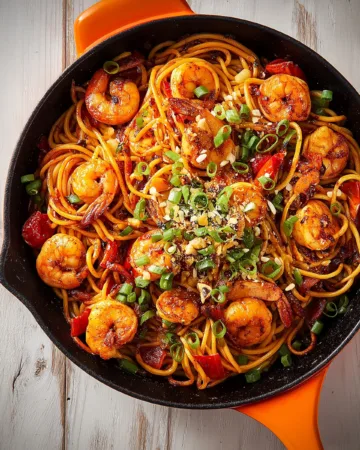
Shrimp Kung Pao Noodles are the kind of bold, saucy meal that instantly upgrades a regular dinner night. This recipe blends tender shrimp, chewy noodles, crisp vegetables, and a spicy peanut-studded sauce that clings to every bite. Shrimp Kung Pao Noodles balance heat, sweetness, and savory depth without feeling heavy, making them perfect for busy weeknights or casual gatherings.
The flavors are inspired by classic Kung Pao-style stir fries, but adapted into a noodle-based dish that feels comforting and exciting at the same time. With simple ingredients and a clear method, Shrimp Kung Pao Noodles can become a reliable favorite in your cooking rotation.
Essential Kitchen Equipment
Cooking Tools You Will Need
A large pot is needed to cook the spaghetti evenly without sticking. Choose one with enough space so the noodles can move freely while boiling.
A wide skillet or sauté pan works best for building layers of flavor. The wider surface allows shrimp to sear quickly and vegetables to soften without steaming.
A sharp knife and cutting board are important for prepping vegetables, shrimp, and aromatics efficiently. Clean cuts help everything cook at the same pace.
Helpful Extras for Smooth Cooking
A whisk helps blend the sauce smoothly, especially when combining cornstarch with liquid ingredients.
Tongs or a large spoon make tossing the noodles with sauce easier and prevent breakage. Measuring cups and spoons ensure balanced flavors every time.
Ingredients List
Noodles and Proteins
One pound spaghetti forms the hearty base of this dish. Its structure holds up well to bold sauces and stir frying.
One pound raw shrimp, peeled and deveined, provides a tender and juicy protein that cooks quickly and absorbs flavor well.
Aromatics and Vegetables
Fresh ginger, finely minced, adds warmth and brightness to the dish. Garlic brings savory depth and aroma.
Green onions give a mild onion flavor and fresh finish, while bell peppers add sweetness, color, and crunch.
Sauce Components
Low sodium soy sauce such as Kikkoman Naturally Brewed Soy Sauce, San J Tamari Soy Sauce, or La Choy Soy Sauce creates a savory backbone.
Low sodium chicken broth adds moisture and balances the saltiness of the sauce.
Sweet chili sauce provides sweetness and mild heat, while rice vinegar adds gentle acidity.
Cornstarch thickens the sauce so it coats the noodles evenly.
Oils, Seasonings, and Garnish
Sesame oil delivers nutty aroma, and extra virgin olive oil helps sauté vegetables smoothly.
Roasted peanuts add crunch and classic Kung Pao character.
Fresh cilantro brings brightness and a fresh herbal note at the end.
Sriracha options such as Texas Pete Original Hot Sauce, Crystal Hot Sauce, or Sriraja Panich Hot Sauce allow you to control spice.
Step by Step Cooking Method
Preparing the Noodles
Bring a large pot of salted water to a rolling boil. Add the spaghetti and stir gently to prevent sticking during the first minute.
Cook the pasta according to package directions until just tender. Avoid overcooking since the noodles will finish cooking in the skillet later.
Drain the spaghetti thoroughly and set it aside. Toss lightly with a small drizzle of olive oil if needed to prevent clumping.
Cooking the Shrimp
Place a large skillet over medium heat and add sesame oil. Once warm, add sliced green onions and minced ginger.
Stir constantly for about one minute until fragrant. This step builds the aromatic base of Shrimp Kung Pao Noodles.
Add the shrimp to the skillet in a single layer. Season with kosher salt and freshly ground black pepper.
Cook the shrimp for about three minutes, turning once, until pink and opaque. Remove shrimp from the skillet and set aside to avoid overcooking.
Building the Sauce and Vegetables
In the same skillet, add extra virgin olive oil and chopped bell peppers. Cook for about five minutes until softened but still slightly crisp.
Add minced garlic and cook for one additional minute, stirring constantly to prevent burning.
Sprinkle cornstarch evenly over the vegetables and stir well to coat everything. This helps the sauce thicken evenly later.
Pour in soy sauce, chicken broth, sweet chili sauce, Sriracha, and rice vinegar. Whisk gently until the mixture is smooth.
Let the sauce simmer for one to two minutes until it thickens slightly and becomes glossy.
Bringing Everything Together
Add the cooked spaghetti back into the skillet, followed by the shrimp and roasted peanuts.
Toss everything gently but thoroughly so the noodles are fully coated in sauce.
Cook for another one to two minutes until everything is heated through and well combined.
Remove from heat and garnish with freshly chopped cilantro before serving.
Tips and Tricks for Best Results
Flavor Balance Tips
Taste the sauce before adding noodles and adjust seasoning as needed. A little extra vinegar brightens the dish, while more sweet chili sauce softens the heat.
Using low sodium soy sauce keeps Shrimp Kung Pao Noodles from becoming overly salty, especially after reduction.
Texture and Cooking Tips
Do not overcrowd the skillet when cooking shrimp. Cooking in batches if necessary ensures proper searing and tenderness.
Keep vegetables slightly crisp for contrast with the soft noodles and shrimp.
Time Saving Tricks
Prep all ingredients before turning on the stove. Stir fry cooking moves quickly and having everything ready prevents mistakes.
Use pre roasted peanuts to save time and add instant crunch without extra steps.
Important Notes
Ingredient Flexibility
Spaghetti works well, but other long noodles like linguine or rice noodles can also be used with slight cooking adjustments.
Shrimp size matters. Medium to large shrimp are ideal, as smaller shrimp can overcook quickly.
Sauce Consistency
If the sauce thickens too much, add a splash of chicken broth to loosen it. If it is too thin, simmer for another minute.
Cornstarch must be fully dissolved to avoid lumps. Whisk thoroughly when adding liquids.
Heat Level Control
Sriracha can be adjusted based on preference. Start with less and add more gradually.
Peanuts add richness, so balance with acidity from rice vinegar to keep the dish lively.
Storage Guidelines
Refrigeration
Allow Shrimp Kung Pao Noodles to cool completely before storing. Transfer to an airtight container and refrigerate for up to three days.
The flavors deepen over time, making leftovers especially enjoyable the next day.
Reheating
Reheat gently in a skillet over medium heat with a splash of chicken broth to refresh the sauce.
Avoid overheating to prevent shrimp from becoming rubbery.
Freezing Considerations
Freezing is not recommended due to texture changes in shrimp and noodles. For best quality, enjoy fresh or refrigerated.
Variations to Try
Shrimp Kung Pao Noodles can be customized easily. Swap shrimp with sliced chicken breast or beef strips for a different protein experience.
Add vegetables like snap peas, zucchini, or carrots for extra color and nutrition.
For a milder version, reduce Sriracha and increase sweet chili sauce slightly. For extra heat, add crushed red pepper flakes.
Serving Suggestions
Serve Shrimp Kung Pao Noodles hot in wide bowls to keep the noodles evenly coated with sauce.
Pair with a simple cucumber salad or steamed vegetables to balance the bold flavors.
A sprinkle of extra peanuts or green onions on top adds visual appeal and texture.
Conclusion
Shrimp Kung Pao Noodles deliver bold flavor, satisfying texture, and quick preparation in one complete dish. This recipe combines tender shrimp, savory sauce, crunchy peanuts, and perfectly cooked noodles into a meal that feels both comforting and exciting. With simple ingredients and adaptable steps, Shrimp Kung Pao Noodles fit effortlessly into busy schedules while still feeling special. Once you master this method, it becomes easy to adjust flavors and make it your own. This is a dish worth returning to whenever you crave something vibrant, spicy, and deeply satisfying.
PrintShrimp Kung Pao Noodles
- Total Time: 35 minutes
- Yield: 4 servings
Description
Shrimp Kung Pao Noodles are a bold and satisfying noodle dish made with tender shrimp, colorful bell peppers, crunchy peanuts, and a savory spicy sauce. This recipe delivers a perfect balance of heat, sweetness, and umami while remaining easy enough for a weeknight meal. The noodles soak up every bit of sauce, creating a comforting and flavorful dish that feels restaurant quality at home.
Ingredients
Spaghetti
Raw shrimp, peeled and deveined
Sesame oil
Extra virgin olive oil
Green onions, thinly sliced
Fresh ginger, minced
Garlic cloves, minced
Bell peppers, chopped
Cornstarch
Low sodium soy sauce such as Kikkoman Naturally Brewed Soy Sauce, San J Tamari Soy Sauce, or La Choy Soy Sauce
Low sodium chicken broth
Sweet chili sauce
Sriracha such as Texas Pete Original Hot Sauce, Crystal Hot Sauce, or Sriraja Panich Hot Sauce
Rice vinegar
Roasted peanuts
Kosher salt
Freshly ground black pepper
Fresh cilantro for garnish
Instructions
1. Bring a large pot of salted water to a boil and cook the spaghetti until just tender, then drain and set aside
2. Heat sesame oil in a large skillet over medium heat and cook green onions and ginger until fragrant
3. Add shrimp to the skillet, season with salt and pepper, and cook until opaque, then remove and set aside
4. Add olive oil to the same skillet and cook bell peppers until softened
5. Stir in garlic and cook briefly until aromatic
6. Sprinkle cornstarch over the vegetables and stir well
7. Pour in soy sauce, chicken broth, sweet chili sauce, Sriracha, and rice vinegar, whisking until smooth
8. Simmer the sauce until slightly thickened
9. Add cooked noodles, shrimp, and peanuts to the skillet and toss until evenly coated
10. Remove from heat and garnish with fresh cilantro before serving
Notes
Do not overcook the shrimp, as they can become rubbery very quickly
Use low sodium soy sauce to keep the dish balanced and not overly salty
Adjust the spice level by increasing or decreasing the amount of Sriracha
If the sauce becomes too thick, add a small splash of chicken broth to loosen it
Fresh ginger and garlic provide the best flavor compared to powdered versions
- Prep Time: 15 minutes
- Cook Time: 20 minutes
- Category: Main Course
- Method: Stir Fry
- Cuisine: Asian Inspired