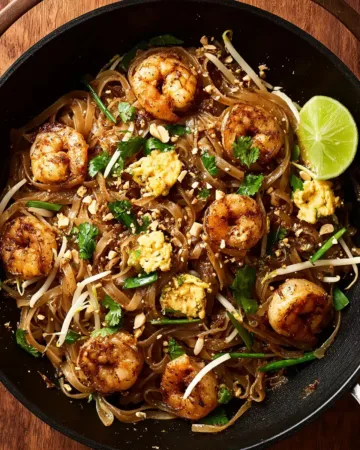
Pad Thai is one of the most loved noodle dishes in American kitchens, known for its balance of savory, tangy, sweet, and nutty flavors. This Pad Thai recipe is designed to be approachable, deeply flavorful, and reliable even for home cooks making it for the first time.
By focusing on technique, timing, and ingredient balance, this version delivers restaurant style results without complicated steps. Pad Thai shines when each component is prepared with intention, from tender rice noodles to a glossy tamarind sauce that coats every bite. In this guide, you will learn how to build authentic flavor, avoid soggy noodles, and serve Pad Thai at its absolute best.
Equipment
A large wok or wide heavy skillet is essential to cook Pad Thai evenly and quickly.
A heatproof bowl is needed for soaking rice noodles.
A medium mixing bowl works for holding cooked shrimp and eggs.
A small bowl and whisk help combine the sauce smoothly.
A sharp knife and cutting board ensure clean prep for aromatics and garnishes.
Tongs or a wide spatula make tossing noodles easier and prevent breakage.
Ingredients List
Rice noodles, eight ounces, broken in half for easier tossing and even cooking.
Peanut oil or vegetable oil, six tablespoons total, divided for controlled cooking.
Medium shrimp, one pound, peeled, deveined, and tails removed for easy eating.
Large eggs, three, lightly whisked for soft curds.
Palm sugar, three tablespoons, finely shaved or crushed to dissolve quickly.
Thai fish sauce, three tablespoons, for savory depth and balance.
Tamarind puree, two tablespoons, for classic Pad Thai tang.
Fresh lime juice, one tablespoon, plus extra lime wedges for serving.
Cayenne pepper, one quarter teaspoon, adjustable for heat preference.
Medium shallot, finely chopped, about three tablespoons.
Garlic cloves, three, finely chopped for aroma.
Scallions, six, cut into one inch pieces for freshness.
Bean sprouts, one cup, rinsed and drained well.
Roasted peanuts, one quarter cup, coarsely chopped.
Fresh cilantro, two tablespoons, coarsely chopped, optional but bright.
Preparing the Foundations
Noodles Done Right
Pad Thai depends on properly prepared rice noodles. Place the broken noodles in a large heatproof bowl and cover with boiling water. Let them soak until pliable and tender but not mushy. This usually takes twenty to thirty minutes depending on thickness. Drain well and set aside. Proper soaking prevents the noodles from overcooking later in the wok.
Sauce Balance Matters
In a small bowl, whisk palm sugar, fish sauce, tamarind puree, lime juice, cayenne pepper, two tablespoons oil, and one tablespoon water. Whisk until the sugar dissolves and the sauce looks glossy. Taste and adjust. Pad Thai should lean savory and tangy with gentle sweetness, never cloying.
Cooking Proteins and Eggs
Shrimp Timing
Heat one tablespoon oil in a large wok over high heat. Add shrimp in a single layer and cook, turning once, until just pink and opaque. This takes about two to three minutes. Remove immediately to a bowl. Overcooking shrimp will make Pad Thai rubbery, so keep this step quick.
Soft Scrambled Eggs
Lower heat to medium and add one tablespoon oil. Pour in the whisked eggs and gently stir, breaking them into soft curds. Cook just until set but still tender. Transfer the eggs to the bowl with shrimp. Keeping eggs separate protects their texture during final tossing.
Building Flavor in the Wok
Aromatics First
Increase heat to medium high and add two tablespoons oil to the same wok. Add chopped shallot and garlic, stirring constantly. Cook until fragrant and lightly golden, about one minute. Add scallions and cook another one to two minutes until softened. This aromatic base is essential for classic Pad Thai flavor.
Bringing It All Together
Pour the prepared sauce into the wok and bring it to a gentle simmer. Add soaked noodles, shrimp, and eggs. Toss constantly using tongs or a spatula, allowing the noodles to absorb the sauce. Cook for about two minutes until everything is heated through and glossy. Add bean sprouts and peanuts, tossing briefly to combine while keeping sprouts crisp.
Finishing Touches and Texture
Final Adjustments
Taste the Pad Thai and adjust seasoning if needed. A squeeze of lime can brighten flavors, while a pinch of palm sugar can soften sharpness. The noodles should be tender with a light chew and evenly coated.
Garnish and Serve
Remove from heat and transfer to a serving platter. Sprinkle with chopped peanuts and fresh cilantro if using. Serve immediately with lime wedges on the side. Pad Thai is best enjoyed hot, straight from the wok.
Step by Step Summary
Soak rice noodles in boiling water until tender, then drain.
Cook shrimp quickly in hot oil and set aside.
Soft scramble eggs and reserve with shrimp.
Whisk palm sugar, fish sauce, tamarind, lime juice, cayenne, oil, and water.
Cook shallot, garlic, and scallions until fragrant.
Simmer sauce, add noodles, shrimp, and eggs, then toss until glossy.
Finish with bean sprouts and peanuts, adjust seasoning, and serve.
Tips and Tricks
Use a wide wok to prevent steaming the noodles. Crowding causes sogginess.
Have all ingredients prepped before heating the wok since Pad Thai cooks fast.
If noodles seem dry, add one to two tablespoons water and toss quickly.
Palm sugar adds depth, but light brown sugar can work in a pinch.
Always taste the sauce before adding it to the wok to control balance.
Cook over high heat during final tossing to mimic street style texture.
Do not overmix after adding bean sprouts to keep them crisp.
Fresh lime at the end brightens the entire dish.
Notes
Pad Thai is all about balance rather than strict measurements. Adjust sweetness, saltiness, and acidity to suit your palate. Tamarind puree varies in strength, so start modest and add more if needed. Shrimp can be swapped for sliced chicken breast or firm tofu without changing the method. Keeping components separate until the final toss helps maintain texture. This approach ensures your Pad Thai tastes layered and intentional rather than muddled.
Storage
Pad Thai is best eaten fresh, but leftovers can be stored. Let the noodles cool completely, then transfer to an airtight container. Refrigerate for up to two days. Reheat gently in a skillet over medium heat with a splash of water to loosen the noodles. Avoid microwaving if possible, as it can dry out shrimp and make noodles gummy. Add fresh lime or scallions after reheating to revive flavor.
Variations
For a vegetable forward Pad Thai, add sliced bell peppers, carrots, or snap peas with the scallions. For extra richness, stir in a tablespoon of natural peanut butter into the sauce. Increase cayenne or add crushed red pepper for more heat. Use chicken or tofu instead of shrimp while keeping the same cooking sequence. These variations keep Pad Thai exciting without losing its identity.
Serving Suggestions
Serve Pad Thai on warm plates with extra lime wedges and chopped peanuts. A simple cucumber salad or steamed greens pairs well and keeps the meal balanced. This dish works beautifully as a standalone main or as part of a shared table.
Conclusion
Pad Thai is a timeless noodle dish that rewards attention to detail and balance. By preparing each component thoughtfully and cooking with confidence, you can create Pad Thai that rivals your favorite takeout. This recipe focuses on technique, clean flavors, and reliable results, making it ideal for weeknight cooking or casual gatherings. Once mastered, Pad Thai becomes a flexible, satisfying staple you will return to again and again.
PrintPad Thai Recipe
- Total Time: 35 minutes
- Yield: 4 servings
Description
Pad Thai is a classic noodle dish known for its balance of savory, tangy, slightly sweet flavors and satisfying textures.
This version focuses on clear technique, clean ingredients, and a reliable cooking method that works well in home kitchens.
Tender rice noodles are tossed with shrimp, soft eggs, aromatic garlic and shallots, and a glossy tamarind based sauce.
Crunchy peanuts and fresh lime add contrast and brightness to every bite.
Ingredients
Rice noodles, broken in half for easier cooking
Peanut oil or vegetable oil, divided
Medium shrimp, peeled, deveined, tails removed
Large eggs, lightly whisked
Palm sugar, finely shaved or crushed
Thai fish sauce
Tamarind puree
Fresh lime juice plus extra lime wedges for serving
Cayenne pepper
Medium shallot, finely chopped
Garlic cloves, finely chopped
Scallions cut into short pieces
Fresh bean sprouts, rinsed and drained
Roasted peanuts, coarsely chopped
Fresh cilantro, chopped, optional
Instructions
Soak the rice noodles in boiling water until tender but still slightly chewy, then drain well and set aside
Heat a wok over high heat with a small amount of oil and cook the shrimp just until pink and opaque, then transfer to a bowl
Lower the heat slightly, add oil, and gently cook the whisked eggs until soft curds form, then add them to the shrimp
Whisk together palm sugar, fish sauce, tamarind puree, lime juice, cayenne, oil, and a small splash of water until smooth
Heat oil in the wok and cook the shallot and garlic until fragrant and lightly golden, then add the scallions and soften briefly
Pour in the sauce and let it simmer gently, then add noodles, shrimp, and eggs and toss constantly until well coated and heated through
Add bean sprouts and peanuts, toss gently to combine, and remove from heat
Serve immediately with lime wedges and optional cilantro on top
Notes
Pad Thai cooks very quickly, so all ingredients should be prepared before heating the wok.
The sauce should taste balanced before adding it to the pan, with a mix of savory, tangy, and lightly sweet notes.
Avoid overcooking the noodles during soaking to prevent a mushy texture.
Shrimp can be replaced with chicken or tofu using the same method.
Leftovers keep best for a short time and should be reheated gently with a splash of water.
- Prep Time: 20 minutes
- Cook Time: 15 minutes
- Category: Main Dish
- Method: Stir Fry
- Cuisine: Thai