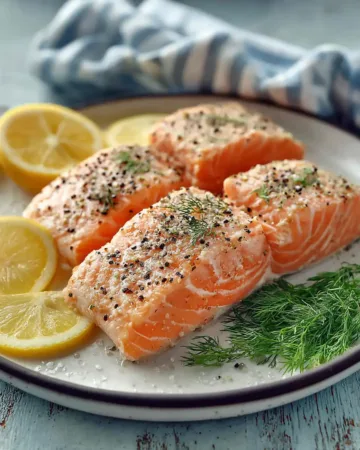
Poached Salmon is one of the cleanest and most reliable ways to cook salmon while preserving its delicate texture and natural flavor. This gentle cooking method uses low heat and aromatic liquid to keep the fish moist, tender, and evenly cooked from edge to center.
Whether you are preparing a light dinner, a healthy meal prep option, or an elegant plate for guests, Poached Salmon delivers consistent results with minimal effort. In this guide, you will learn how to make Poached Salmon step by step, using simple ingredients, practical tips, and techniques that work every time for American home kitchens.
Essential Equipment for Perfect Poached Salmon
Tools That Make Poaching Easier
A wide 12 inch skillet with a tight fitting lid is the most important tool for Poached Salmon. The pan should be large enough to hold the fillets in a single layer so they cook evenly. A lid traps steam and heat, allowing the salmon to cook gently without drying out.
Helpful Kitchen Accessories
A digital instant read thermometer ensures accuracy and prevents overcooking. A pair of fish spatulas or wide tongs helps lift the salmon without breaking it. Paper towels are useful for gently patting the salmon dry before seasoning.
Ingredients List for Flavorful Poached Salmon
Fresh and Simple Ingredients
Two salmon fillets, about six ounces each, with pin bones removed
One cup water
One bunch fresh dill weed
One half teaspoon Diamond Crystal kosher salt or one quarter teaspoon standard kosher salt
One quarter teaspoon black pepper
One quarter teaspoon garlic powder
Ingredient Notes
Fresh salmon works best for Poached Salmon because it holds its structure and flavor. Dill adds a clean herbal aroma that pairs naturally with salmon. Water is used as the poaching liquid to keep the recipe light and neutral, allowing the fish to shine.
Step by Step Method for Tender Poached Salmon
Preparing the Skillet
Start by pouring one cup of water into a wide skillet. Place the skillet over medium heat and allow the water to warm until it begins to gently simmer. Avoid boiling, as high heat can toughen the salmon. A gentle simmer creates the ideal environment for Poached Salmon.
Building the Flavor Base
Rinse the dill weed and lightly pat it dry. Lay most of the dill sprigs directly into the simmering water, creating a fragrant bed. Reserve a few sprigs for garnish later. The dill infuses the poaching liquid and subtly flavors the salmon as it cooks.
Positioning the Salmon
Place the salmon fillets skin side down directly on top of the dill. Keeping the skin side down helps protect the flesh from direct heat and prevents sticking. Arrange the fillets so they do not overlap, ensuring even cooking.
Seasoning the Fish
Sprinkle the salmon evenly with kosher salt, black pepper, and garlic powder. Seasoning at this stage allows the flavors to absorb gently as the fish cooks. Keep the seasoning light, as Poached Salmon is all about balance and purity.
Covering and Cooking
Cover the skillet tightly with its lid. If a lid is not available, use a double layer of aluminum foil to seal in steam. Reduce the heat slightly to maintain a gentle simmer. Cook the salmon for five to ten minutes, depending on thickness.
Checking for Doneness
The salmon is done when it turns opaque and flakes easily in the thickest part. For precision, use a thermometer to confirm an internal temperature of 145 degrees Fahrenheit. Remove the skillet from heat immediately once done to prevent overcooking.
Serving or Chilling
Serve the Poached Salmon right away for a warm, delicate texture. For chilled servings, transfer the fillets carefully to a plate, let them cool, then refrigerate for at least two hours before serving.
Tips and Tricks for Better Poached Salmon
Control the Heat
The most common mistake with Poached Salmon is using heat that is too high. Always keep the liquid at a gentle simmer. Aggressive boiling causes protein to tighten and results in dry fish.
Choose Even Thickness
Select salmon fillets that are similar in thickness so they cook evenly. If one piece is much thicker, it may need an extra minute or two while thinner pieces should be removed earlier.
Enhance the Poaching Liquid
While water works perfectly, you can add subtle aromatics like lemon peel, bay leaf, or sliced shallots for extra depth. Keep additions minimal to avoid overpowering the salmon.
Handle with Care
Poached Salmon is very delicate. Use a wide spatula and lift slowly to maintain the shape of the fillet. Let excess liquid drain briefly before plating.
Season After Cooking if Needed
Taste the salmon once cooked. A light sprinkle of salt or a squeeze of lemon juice can brighten the flavor without masking its natural taste.
Notes on Texture and Flavor
Understanding Poached Salmon Texture
Poached Salmon should feel silky and moist, not firm or rubbery. The flesh should separate into large, tender flakes when pressed gently with a fork.
Color Changes
As salmon poaches, it transitions from translucent to opaque. This visual cue helps gauge doneness even without a thermometer, especially for thinner fillets.
Skin Considerations
The skin will remain attached but soft. It can be easily removed after cooking if desired. Leaving it on during cooking protects the flesh and adds flavor.
Flavor Profile
This Poached Salmon recipe produces a clean and mild taste that highlights the fish itself. It pairs well with sauces, herbs, or simple sides without competing flavors.
Storage and Make Ahead Tips
Refrigeration
Store cooked Poached Salmon in an airtight container in the refrigerator for up to three days. Keep it chilled promptly to maintain freshness and texture.
Serving Cold
Cold Poached Salmon is excellent for salads, sandwiches, or grain bowls. Its texture remains tender and works well with creamy or tangy accompaniments.
Avoid Freezing
Freezing is not recommended for Poached Salmon, as the delicate texture can become watery once thawed. Fresh preparation yields the best results.
Reheating Advice
If reheating is necessary, warm the salmon gently over low heat with a splash of water and a covered pan. Avoid microwaving, which can dry it out quickly.
Variations to Customize Poached Salmon
Citrus Infused Poached Salmon
Add thin slices of lemon or orange peel to the poaching liquid for a bright, fresh aroma that complements the fish.
Herb Blend Option
Swap dill for parsley, thyme, or chives to create a different herbal profile while keeping the method the same.
Spiced Poached Salmon
Add a pinch of white pepper or coriander seed to the water for subtle warmth without overwhelming the salmon.
Serving Suggestions
Serve Poached Salmon with steamed vegetables, roasted potatoes, or a simple green salad. It also pairs beautifully with rice, quinoa, or crusty bread for a complete and satisfying meal.
Conclusion
Poached Salmon is a timeless cooking technique that delivers moist, tender fish with minimal effort and maximum flavor. By using gentle heat, simple ingredients, and careful timing, you can achieve consistent results every time. This recipe proves that Poached Salmon does not require complicated steps or heavy sauces to shine. Whether served warm or chilled, it offers versatility, nutrition, and elegance for everyday meals or special occasions.
PrintPoached Salmon Recipe
- Total Time: 20 minutes
- Yield: 2 servings
Description
This Poached Salmon recipe delivers tender, moist, and flavorful salmon using a gentle stovetop method. Fresh dill, light seasoning, and controlled heat create a clean and delicate dish that works beautifully for weeknight dinners, healthy meal prep, or elegant entertaining. The salmon cooks evenly without drying out, resulting in a silky texture that pairs well with simple sides or sauces.
Ingredients
Two salmon fillets about six ounces each with pin bones removed
One cup water
One bunch fresh dill weed
One half teaspoon Diamond Crystal kosher salt or one quarter teaspoon standard kosher salt
One quarter teaspoon black pepper
One quarter teaspoon garlic powder
Instructions
Pour the water into a wide skillet and place it over medium heat until it reaches a gentle simmer
Rinse the dill weed and place most of it into the skillet, reserving a few sprigs for garnish
Lay the salmon fillets skin side down directly on top of the dill in a single layer
Season the salmon evenly with kosher salt, black pepper, and garlic powder
Cover the skillet tightly with a lid or foil to trap steam
Reduce the heat slightly and maintain a gentle simmer while the salmon cooks
Cook until the salmon turns opaque and flakes easily in the thickest part
Check that the internal temperature reaches one hundred forty five degrees Fahrenheit
Remove the skillet from heat and carefully lift the salmon using a wide spatula
Serve warm or allow the salmon to cool and chill before serving
Notes
Poached salmon should remain moist and tender with a silky texture
Avoid boiling the liquid as high heat can cause the salmon to become dry
Fresh salmon produces the best flavor and structure for this recipe
Leaving the skin on during cooking helps protect the flesh and prevents sticking
The salmon can be served warm or chilled depending on preference
Use a thermometer for the most accurate doneness results
- Prep Time: 10 minutes
- Cook Time: 10 minutes
- Category: Main Dish
- Method: Poaching
- Cuisine: American