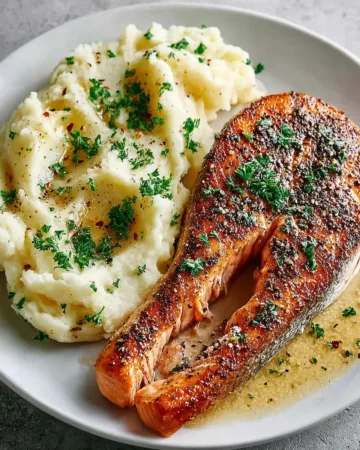
Pan-Fried Salmon Steak is a timeless seafood favorite that delivers rich flavor, crisp edges, and tender flakes using simple pantry ingredients. This Pan-Fried Salmon Steak recipe is designed for home cooks who want reliable results without complicated techniques.
Cooking salmon steaks in a skillet allows you to control heat, texture, and doneness while keeping the fish moist. With butter, sage, and proper timing, Pan-Fried Salmon Steak becomes a restaurant quality meal you can prepare any night of the week. This guide walks you through equipment, ingredients, and expert techniques so every Pan-Fried Salmon Steak turns out golden, juicy, and deeply satisfying.
Equipment
A heavy nonstick or cast iron skillet is essential for even heat distribution.
A fish spatula helps flip the salmon steak cleanly without tearing.
Paper towels are needed to remove surface moisture before cooking.
Measuring spoons ensure balanced seasoning.
A small plate is useful for resting the salmon before serving.
Ingredients List
Atlantic salmon steaks, two pieces, each about eight ounces and half an inch thick, fresh and well trimmed.
Coarse sea salt to enhance natural flavor without overpowering the fish.
Freshly ground black pepper for gentle warmth and balance.
Ground sage for an earthy herbal note that pairs beautifully with salmon.
Unsalted butter to create a rich pan sauce and promote even browning.
Part One
Preparing the Salmon Steak
Start with high quality salmon steaks that appear vibrant and moist, never dull or dry. Pat each steak thoroughly with paper towels to remove excess surface moisture. This step is critical for achieving a proper sear. Moisture left on the surface can cause steaming instead of browning, which affects texture and flavor.
Seasoning for Maximum Flavor
Sprinkle both sides of the salmon steaks evenly with coarse sea salt, black pepper, and ground sage. Gently rub the seasoning into the flesh and along the edges. Allow the seasoned salmon to rest at room temperature for about ten minutes. This brief rest helps the seasoning penetrate and promotes even cooking when the salmon hits the pan.
Step by Step Cooking Method
Place a large skillet over medium high heat and add the unsalted butter. Allow the butter to melt slowly, swirling the pan so the bottom is evenly coated. Watch carefully as the butter begins to foam. Once the foaming subsides, the pan has reached the ideal temperature for Pan-Fried Salmon Steak.
Carefully lay the salmon steaks into the skillet, presentation side down. You should hear a gentle sizzle immediately, which indicates proper heat. Do not move the salmon once it touches the pan. Let it cook undisturbed for about three minutes. This contact time allows a golden crust to form, locking in moisture and flavor.
After three minutes, use a fish spatula to gently turn each salmon steak. Lower the heat to medium to prevent over browning. Continue cooking on the second side for three to five minutes, depending on thickness. The salmon is ready when it flakes easily with a fork and the center is just opaque.
During the final minute of cooking, tilt the pan slightly and spoon the melted butter over the salmon steaks. This basting step adds richness and ensures even cooking from top to bottom. Remove the salmon from the pan and place it on warm plates. Spoon the remaining pan juices over the top for extra flavor.
Tips and Tricks for Perfect Results
Choose salmon steaks with even thickness to avoid uneven cooking. Thicker sections take longer to cook, so consistency matters.
Always preheat the pan fully before adding the salmon. A properly heated skillet prevents sticking and promotes browning.
Avoid overcrowding the pan. Cook in batches if necessary so heat remains steady.
Use unsalted butter so you can control seasoning more precisely.
If the salmon skin is attached, start skin side down and cook slightly longer on that side for crisp texture.
Let the salmon rest for one to two minutes after cooking. This allows juices to redistribute and keeps the fish moist.
Do not press down on the salmon while cooking. Pressing forces juices out and results in dryness.
Notes on Doneness and Timing
Salmon steaks cook differently than fillets due to the central bone and varied thickness. Keep this in mind when judging doneness. The internal color should transition from translucent to opaque while remaining slightly glossy. Overcooked salmon becomes chalky and dry, so remove it from heat just before it looks fully done. Residual heat will finish the cooking process naturally.
If your salmon steaks are thicker than half an inch, add an extra minute per side and lower the heat slightly to avoid burning. For thinner steaks, reduce cooking time accordingly. Trust visual cues and texture more than strict timing for best results.
Storage
Allow leftover Pan-Fried Salmon Steak to cool completely before storing. Place it in an airtight container and refrigerate for up to three days. To reheat, warm gently in a skillet over low heat with a small amount of butter to prevent drying. Avoid microwaving, as it can toughen the fish and alter texture. Leftover salmon can also be flaked cold and added to salads, grain bowls, or wraps for quick meals.
Variations
Enhance your Pan-Fried Salmon Steak by adding fresh lemon zest or minced garlic to the butter during the final minute of cooking. A sprinkle of fresh herbs like parsley or dill adds brightness. For a heartier flavor, substitute olive oil for half of the butter. You can also finish the salmon with a spoonful of simple butter sauce made from pan drippings and a splash of broth for added depth.
Serving Suggestions
Serve Pan-Fried Salmon Steak with roasted vegetables, mashed potatoes, or a simple green salad. Steamed rice or quinoa also pairs well, soaking up the buttery pan juices. For a lighter option, accompany the salmon with sautéed spinach or asparagus seasoned simply with salt and pepper.
Conclusion
Pan-Fried Salmon Steak is an approachable yet elegant dish that highlights the natural richness of salmon with minimal ingredients. By focusing on proper preparation, controlled heat, and simple seasoning, you can consistently achieve tender, flavorful results. This method proves that Pan-Fried Salmon Steak does not require complex steps to taste exceptional. With practice, this recipe becomes a dependable go to meal that fits effortlessly into everyday cooking while still feeling special.
Pan-Fried Salmon Steak
- Total Time: 20 minutes
- Yield: 2 servings
Description
This pan-fried salmon steak recipe delivers rich flavor with a crisp golden exterior and tender, flaky center. Cooked simply in butter with sage and black pepper, it is an easy skillet meal that feels restaurant quality while remaining approachable for home cooks. The method focuses on proper heat control, minimal ingredients, and perfect timing for consistently delicious results.
Ingredients
Two Atlantic salmon steaks, about eight ounces each and roughly half an inch thick
Coarse sea salt, to taste
Freshly ground black pepper, to taste
Ground sage
Unsalted butter
Instructions
1. Pat the salmon steaks completely dry using paper towels to remove surface moisture
2. Season both sides of the salmon with sea salt, black pepper, and ground sage, gently pressing the seasoning into the flesh
3. Heat a large nonstick or cast iron skillet over medium high heat and add the butter, swirling to coat the pan evenly
4. Allow the butter to melt and foam, then wait until the foaming subsides before adding the salmon
5. Place the salmon steaks in the skillet and let them cook undisturbed until a golden crust forms
6. Carefully turn the salmon steaks and reduce the heat to medium
7. Continue cooking until the salmon is opaque, flakes easily, and remains juicy in the center
8. Spoon the melted butter over the salmon during the final moments of cooking
9. Transfer the salmon to plates and drizzle with the pan juices before serving
Notes
Salmon steaks cook differently than fillets due to the center bone and uneven thickness, so visual cues are more reliable than strict timing
The salmon is perfectly cooked when the flesh turns opaque and flakes easily without becoming dry
Letting the salmon rest briefly after cooking allows juices to redistribute and improves texture
If the steaks are thicker than average, lower the heat slightly and cook longer to prevent burning
Avoid moving the salmon too early, as this prevents proper browning and can cause sticking
- Prep Time: 10 minutes
- Cook Time: 10 minutes
- Category: Main Course
- Method: Pan-Frying
- Cuisine: American