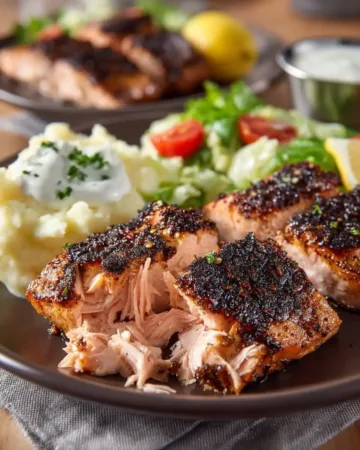
The Copycat Texas Roadhouse Salmon Recipe is one of the most searched restaurant style seafood dishes in the United States. People love its rich garlic butter flavor, crispy exterior, and tender flaky center. This homemade version captures everything diners crave while keeping the ingredients simple and accessible.
By making this Copycat Texas Roadhouse Salmon Recipe at home, you gain full control over freshness, seasoning, and cooking temperature. The result is a skillet seared salmon that tastes indulgent yet feels approachable for weeknight dinners or special meals. This guide walks you through every detail so your salmon turns out perfectly juicy and restaurant worthy every single time.
Essential Tools and Preparation Basics
Equipment Needed for Perfect Salmon
To make the Copycat Texas Roadhouse Salmon Recipe properly, the right tools matter. A cast iron skillet is highly recommended because it holds heat evenly and helps achieve that golden crispy skin. A fish spatula allows clean flipping without tearing the fillet. You will also need a microplane or fine grater for lemon zest, a sharp knife, a small mixing bowl, and paper towels to dry the salmon thoroughly.
An instant read meat thermometer is one of the most important tools in this recipe. Salmon cooks quickly and can overcook in seconds. Using a thermometer ensures consistent doneness and protects the delicate texture that defines this Copycat Texas Roadhouse Salmon Recipe.
Ingredient Selection and Flavor Balance
Choose fresh salmon fillets that are about four ounces each and similar in thickness. Center cut fillets cook more evenly and look better when served. Olive oil provides a clean base flavor, while butter adds richness later in the cooking process. Fresh garlic delivers aroma and depth, and lemon brings brightness that balances the buttery finish.
Salt, black pepper, and garlic powder are simple but effective. They enhance the salmon without overpowering its natural taste. Every ingredient in this Copycat Texas Roadhouse Salmon Recipe plays a role in creating bold flavor with minimal effort.
Ingredients List and Seasoning Strategy
Ingredients List
Four salmon fillets, each four ounces, skin on
One half teaspoon salt
One half teaspoon black pepper
One half teaspoon garlic powder
One fresh lemon, zested and juiced
One tablespoon olive oil
Three cloves fresh garlic, minced
Four tablespoons butter
These ingredients are intentionally straightforward. The simplicity allows the salmon to shine while still delivering the rich taste people expect from the Copycat Texas Roadhouse Salmon Recipe.
Seasoning Notes Before Cooking
Before cooking, always rinse the salmon briefly and pat it completely dry. Moisture is the enemy of crispy skin. Lemon zest is mixed directly with the dry spices to release aromatic oils that cling to the surface of the fish. This step builds layered citrus flavor without making the salmon acidic too early.
Rub the seasoning blend gently into the flesh side only. Leaving the skin unseasoned helps it crisp instead of steaming. This small detail makes a noticeable difference in texture and appearance.
Step by Step Cooking Instructions
Preparing the Salmon
Start by placing the salmon fillets on a clean plate, skin side down. Pat the flesh thoroughly with paper towels until dry. In a small bowl, combine salt, black pepper, garlic powder, and fresh lemon zest. Mix well so the zest distributes evenly.
Rub this seasoning mixture onto the flesh side of each salmon fillet. Press lightly so the spices adhere. Allow the salmon to rest at room temperature for about ten minutes. This helps it cook evenly and prevents sticking.
Searing the Salmon Properly
Heat a cast iron skillet over medium high heat. Add olive oil and swirl to coat the pan. When the oil shimmers and looks hot, place the salmon fillets skin side down into the skillet. Lay them away from you to avoid splatter.
Do not move the salmon for three to four minutes. This allows the skin to crisp and release naturally from the pan. You should see the edges turning opaque as the heat travels upward through the fillet.
Using a fish spatula, carefully flip the salmon. Cook for another two to three minutes depending on thickness. Thinner fillets may only need two minutes per side.
Garlic Butter Finish
Once flipped, add butter and minced garlic directly to the pan. As the butter melts, tilt the skillet slightly and spoon the garlic butter over the salmon repeatedly. This basting step is essential to achieving the signature richness of the Copycat Texas Roadhouse Salmon Recipe.
Squeeze fresh lemon juice from half the lemon into the pan. The juice will sizzle and blend with the butter, creating a glossy sauce that coats the fish beautifully.
Checking Doneness and Resting
Insert an instant read thermometer into the thickest part of the salmon. For medium rare, the temperature should read 125 degrees Fahrenheit. This usually takes two to five minutes depending on thickness.
The salmon will change from deep pink to a lighter opaque color along the sides. Remove the fillets from the skillet immediately to prevent carryover cooking. Let them rest for one minute before serving. Garnish with lemon wedges if desired.
Expert Tips, Notes, Storage, and Variations
Tips and Tricks for Best Results
Always start with a hot pan. A cold skillet will cause sticking and uneven browning. Dry salmon thoroughly before seasoning to achieve crispy skin. Avoid overcrowding the pan, which traps steam and prevents proper searing.
Use real butter, not margarine, for the best flavor and sauce texture. Fresh garlic should be added only after flipping to avoid burning. Basting continuously creates moisture and prevents the salmon from drying out.
Notes on Texture and Flavor
This Copycat Texas Roadhouse Salmon Recipe is designed to highlight natural salmon flavor with minimal seasoning. Lemon zest adds aroma without sharp acidity. Garlic butter provides richness while olive oil keeps the finish clean.
Cooking to 125 degrees yields a tender, juicy center that flakes easily. If you prefer firmer salmon, cook to 130 degrees but avoid exceeding that to prevent dryness.
Storage and Reheating
Store leftover salmon in an airtight container in the refrigerator for up to two days. To reheat, place the salmon in a skillet over low heat with a small amount of butter. Cover loosely and warm gently until heated through.
Avoid microwaving as it dries out the fish and alters the texture. Leftover salmon can also be flaked cold into salads or wraps for a quick meal.
Variations to Try
Add smoked paprika or a pinch of cayenne to the seasoning mix for gentle heat. Fresh herbs like parsley or thyme can be added to the butter for extra aroma. For a richer sauce, add an extra tablespoon of butter during basting.
You can also use this method with trout or Arctic char while keeping the same seasoning profile.
Serving Suggestions
Serve this Copycat Texas Roadhouse Salmon Recipe with roasted vegetables, mashed potatoes, or a fresh green salad. Steamed rice or sautéed green beans pair beautifully with the garlic butter sauce.
Conclusion
This Copycat Texas Roadhouse Salmon Recipe delivers restaurant style flavor using simple ingredients and straightforward technique. From crispy skin to tender flaky flesh, every step is designed to maximize taste and texture. By following these detailed instructions, tips, and notes, you can confidently recreate this popular salmon dish at home. Whether for a casual dinner or an impressive main course, this recipe proves that high quality seafood does not require complicated methods. With practice, it will become a reliable favorite in your kitchen.
PrintCopycat Texas Roadhouse Salmon Recipe
- Total Time: 20 minutes
- Yield: 4 servings
Description
This Copycat Texas Roadhouse Salmon Recipe delivers tender, flaky salmon with crispy skin and a rich garlic butter finish. Cooked in a hot skillet and finished with fresh lemon juice, this restaurant style salmon is easy to prepare at home and packed with bold, buttery flavor.
Ingredients
Four salmon fillets, four ounces each, skin on
Salt for seasoning
Black pepper for seasoning
Garlic powder for seasoning
One fresh lemon for zest and juice
Olive oil for searing
Fresh garlic cloves, minced
Butter for basting
Instructions
Rinse the salmon briefly under cold water and pat completely dry using paper towels
Combine salt, black pepper, garlic powder, and fresh lemon zest in a small bowl
Gently rub the seasoning mixture onto the flesh side of each salmon fillet
Heat a cast iron skillet over medium high heat and add olive oil once hot
Place the salmon fillets skin side down into the skillet and allow them to cook undisturbed until the skin becomes crisp
Carefully flip the salmon using a fish spatula and continue cooking on the second side
Add butter and minced garlic to the skillet and allow the butter to melt
Spoon the garlic butter over the salmon repeatedly while it finishes cooking
Squeeze fresh lemon juice into the pan to brighten the flavor
Check doneness using an instant read thermometer and remove salmon once tender and flaky
Transfer salmon to a plate and allow it to rest briefly before serving
Notes
For best results, use salmon fillets that are similar in thickness so they cook evenly
Drying the salmon thoroughly before seasoning helps achieve crispy skin
Avoid moving the salmon while it sears to prevent sticking
Fresh garlic should be added only after flipping to avoid burning
Cooking salmon to a medium doneness keeps it juicy and tender
Leftover salmon can be stored in an airtight container in the refrigerator for up to two days
- Prep Time: 10 minutes
- Cook Time: 10 minutes
- Category: Main Course
- Method: Skillet Cooking
- Cuisine: American